Ole Stock: A Vintage Hand-Drawn Sans Serif Font Review
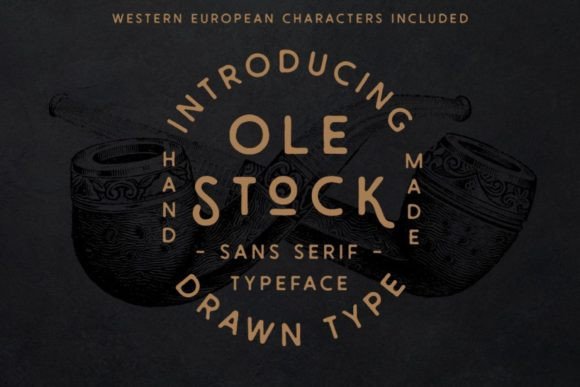
I was staring at a blank brand board for a local artisan coffee roaster last Tuesday, trying to crack the code on their visual identity. The client wanted something that felt established yet approachable, with a nod to mid-century industrial design but without looking like a generic template. I scrolled through my library of Fonts, skipping over the overly polished geometric options until I landed on Ole Stock. This Sans Serif typeface immediately stood out because it didn’t try too hard. It felt authentic. As I dropped it into a logo draft, the hand-drawn imperfections gave the brand instant character, proving that Ole Stock is a vintage hand drawn sans serif font that is perfect for creating branding badges to fit your vintage, industrial or retro themes. This font features multilingual support and also a secondary set of glyphs that adds surprising versatility to a seemingly simple display face.
Using Ole Stock for Vintage Industrial Branding Badges
The primary strength of Ole Stock lies in its ability to anchor a badge-style logo. In my recent project, I used it to wrap text around a circular emblem, and the natural variation in stroke width made it feel stamped or printed rather than digitally rendered. When you are working with Fonts that aim for a retro aesthetic, the danger is often falling into cliché territory with excessive distressing or fake wear. Ole Stock avoids this by relying on its structural integrity as a Sans Serif. The letters are bold and confident, making them ideal for short phrases, brand names, or taglines that need to pop on packaging labels or shop signage. I found that it performed exceptionally well when scaled up for large-format printing, such as poster headers or storefront windows, where the hand-drawn nuances become part of the texture rather than a distraction.
For designers building a complete brand identity, this typeface serves as a powerful display font. It commands attention without screaming. I tested it on a mockup for a craft beer label, pairing it with a clean, neutral body copy. The contrast worked beautifully. The Ole Stock headline provided the personality and historical weight, while the supporting text ensured readability. This balance is crucial in commercial design assets, where you need to guide the viewer’s eye without overwhelming them. If you are creating branding badges for a boutique hotel, a barbershop, or a handmade goods store, this font provides that immediate "established" feel that clients often crave but struggle to articulate.
Pairing Ole Stock with Modern Typography Systems
One of the most common questions I get from junior designers is how to pair a character-rich display font without creating visual chaos. With Ole Stock, the key is restraint. Since Ole Stock is a vintage hand drawn sans serif font that is perfect for creating branding badges to fit your vintage, industrial or retro themes. This font features multilingual support and also a secondary style option, you have some flexibility, but I recommend keeping the rest of your typography system minimal. I typically pair it with a humanist sans serif for body text or a classic serif for editorial layouts to create a sophisticated tension between the old and the new.
In a recent social media graphics campaign, I used Ole Stock for the main headlines on Instagram carousels. The font’s inherent charm stopped the scroll, but I kept the captions in a simple, legible sans serif to maintain clarity on small screens. This approach ensures that the Fonts you choose serve the content rather than competing with it. For web design, using Ole Stock in hero sections or call-to-action buttons can add a layer of warmth and authenticity that standard web-safe fonts lack. However, avoid using it for long paragraphs or small footnotes. Its hand-drawn nature means that at very small sizes, the unique letterforms might lose definition, reducing readability. It is best reserved for titles, logos, and short accents where its personality can shine.
Evaluating Multilingual Support and Technical Features
Beyond its aesthetic appeal, the technical robustness of Ole Stock makes it a viable choice for international brands. The fact that Ole Stock is a vintage hand drawn sans serif font that is perfect for creating branding badges to fit your vintage, industrial or retro themes. This font features multilingual support and also a secondary set of characters means you can deploy it across different markets without losing consistency. I tested it with special characters and accented letters for a European client, and the hand-drawn style remained consistent across the entire glyph set. This level of attention to detail is what separates a premium font from a free download found on a sketchy website.
When reviewing Fonts for client work, I always check the file formats and licensing terms. Ole Stock comes in standard formats that integrate smoothly into Adobe Creative Cloud and other design tools. The inclusion of a secondary style allows for subtle variations within a single brand system. For example, you might use the primary weight for the main logo and the secondary style for subheads or decorative elements on packaging. This versatility extends the life of the typeface, allowing it to adapt to different mediums, from business cards to large-scale environmental graphics. Always ensure you review the commercial license before using it in client projects, especially if the end product involves merchandise, print-on-demand items, or widespread digital distribution.
Practical Tips for Testing Ole Stock in Real Projects
Before committing to Ole Stock for a final deliverable, I recommend a few practical tests. First, print it out. Screen rendering can sometimes smooth out the rough edges that give this Sans Serif its charm. Seeing it on paper helps you judge how the ink might spread or how the weight feels in a physical context. Second, test it against various backgrounds. Because it is a display font, it needs contrast to work effectively. Try it on textured papers, solid colors, and photographic backgrounds to see where it holds up best. Finally, consider the audience. While Ole Stock is perfect for vintage and industrial themes, it might not be the right fit for a high-tech startup or a corporate law firm. Understanding the emotional resonance of your Fonts is just as important as their visual structure.
In conclusion, Ole Stock is a thoughtful addition to any designer’s toolkit. It offers a specific mood—nostalgic, sturdy, and handcrafted—that is difficult to replicate with standard typefaces. Whether you are designing a logo for a new bakery, refreshing the packaging for a skincare line, or creating social media assets for a creative studio, this font delivers both style and substance. Its multilingual support and secondary styles add professional depth, making it a reliable choice for diverse branding needs. By treating it as a specialized tool for headlines and badges rather than a universal solution, you can leverage its unique character to create memorable and engaging brand identities.