Balgena Typeface Review for Modern Branding
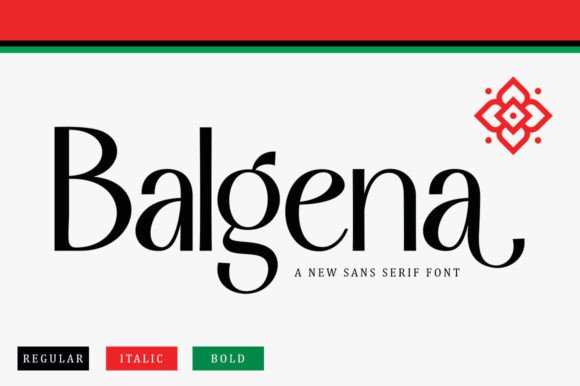
Balgena is a versatile, high-contrast sans serif font family that immediately caught my eye while I was staring at a blank brand board for a local artisan skincare line. As a designer who has tested hundreds of fonts, I often look for that specific balance between modern minimalism and distinct character, and this typeface delivers exactly that. It is not just another geometric sans; it carries a subtle elegance that makes it stand out in crowded visual spaces.
Using Balgena for Elegant Logo Design and Brand Identity
When I first dropped Balgena into a logo concept, the high-contrast strokes did the heavy lifting. Most sans serif fonts can feel a bit flat or overly corporate if you are not careful, but the varying stroke widths here add a layer of sophistication without sacrificing readability. For the skincare project, I used the bold weight for the brand name and found that the clean lines created a sense of trust and purity. The extra glyphs included in the family gave me more options in designing custom ligatures, which made the logotype feel bespoke rather than typed out. This attention to detail is what separates a generic template from a classy, elegant, and unique brand identity.
I have found that Balgena works exceptionally well as a display font for logos where the name is short to medium in length. The letterforms have enough personality to hold their own as the primary visual element. However, because it is a high-contrast design, I would advise against using the thinnest weights for very small logo applications, such as favicon sizes or tiny embroidery on clothing tags, where the fine details might get lost. For standard business cards, website headers, and storefront signage, however, it performs beautifully, maintaining clarity while exuding a premium feel.
Creating Classy Packaging with High-Contrast Sans Serif Fonts
Moving from the logo to the packaging mockup, I tested how Balgena handled product labels and informational text. One of the biggest challenges in packaging design is hierarchy, and this font family helps solve that through its varied weights. I used the medium weight for ingredient lists and the bold for product names. The result was a clean, organized layout that looked expensive and intentional. These extras will make a design look more classy, elegant, unique, and professional, which is crucial when you are trying to justify a higher price point for physical goods.
The versatility of Balgena shines here because it does not fight with other design elements. Whether placed over a textured paper background or a glossy label, the high-contrast nature of the sans serif letters creates a nice visual rhythm. I particularly appreciated how the uppercase characters sit; they are sturdy and confident, making them ideal for short phrases like "Organic," "Handmade," or "Limited Edition." If you are crafting packaging for boutique items, bakery goods, or luxury cosmetics, this typeface provides that modern touch that appeals to contemporary consumers.
Pairing Balgena with Script and Serif Fonts for Social Media
In my recent work on social media graphics, I needed a font that could anchor a layout while allowing other elements to breathe. Balgena proved to be an excellent partner for both script and serif fonts. When I paired it with a flowing handwritten font for a quote graphic, the structural stability of the sans serif balanced the fluidity of the script perfectly. This combination is a classic technique in modern typography, and Balgena executes it with grace. It does not dominate the space but rather supports the overall message, ensuring that the design remains readable and engaging on small mobile screens.
For Instagram carousels and Pinterest pins, readability is key. I found that the medium and regular weights of Balgena are perfect for body copy in digital formats. Unlike some decorative fonts that become illegible at smaller sizes, this family maintains its integrity. The open counters and clear distinction between similar characters, like the capital 'I' and lowercase 'l', reduce cognitive load for the reader. This makes it a reliable choice for content creators and marketers who need to convey information quickly and clearly without sacrificing aesthetic appeal.
Web Design and Editorial Layouts with Versatile Font Families
Testing Balgena on a website header revealed its strength in digital environments. The high-contrast style translates well to screens, provided you are using a decent resolution. I used it for H1 and H2 tags on a creative studio portfolio site, and it added a layer of editorial sophistication that plain geometric sans serifs often lack. The extra glyphs allowed for subtle typographic flourishes in pull quotes and section dividers, giving the site a custom-coded feel even though it was built on a standard CMS. This level of detail helps elevate the perceived value of the brand online.
However, it is important to note where this font might not be the best fit. For long-form body text in printed books or dense academic journals, a traditional serif font might offer better reading comfort over extended periods. Balgena is primarily a display and interface font, best suited for headlines, short paragraphs, captions, and UI elements. If you are designing a newspaper or a novel, you might want to reserve this sans serif for titles and chapter headings while using a more neutral typeface for the main text. Understanding these limitations ensures you use the font where it shines brightest.
Practical Tips for Licensing and Testing Balgena in Client Work
Before finalizing any project with Balgena, I always recommend reviewing the specific license terms. As with any commercial font, you need to ensure that your usage rights cover the intended medium, whether that is print-on-demand products, web embedding, or app integration. Many designers overlook this step, but it is critical for protecting both you and your client. Check if the package includes webfont formats like WOFF or WOFF2 if you plan to use it on live sites, as this affects loading speeds and rendering consistency across different browsers.
Also, take time to explore the full character set. The description mentions extra glyphs, and digging into these can unlock unique design possibilities. Try out the alternates in your design software to see if a slightly different 'a' or 'g' fits your brand voice better. Testing the font in various contexts—black on white, white on dark, large scale, and small scale—will give you confidence in its versatility. By treating Balgena not just as a tool but as a core component of your design system, you can create work that is truly distinctive and memorable.